
Introduction
Welcome to this comprehensive tutorial brought to you by Nextrader.live! If you're looking to elevate your trading game on Deriv, particularly with the fast-paced Volatility 100 Index (V100) and Rise/Fall contracts, you've come to the right place. This guide is specifically designed for traders who want to harness the power of automation, leveraging Nextrader's advanced deriv bots and sophisticated trading tools to execute strategies systematically.
In this tutorial, we will walk you through the precise steps to set up Nextrader's Auto Trader Bot to automatically place Rise/Fall trades on Deriv's V100. We'll focus on utilizing Nextrader's powerful "Smart Signals" strategy, which relies on a minimum of 4 indicators agreeing, ensuring high-probability trade entries. Crucially, we'll integrate the "Mesa Milano" money management system, a smart loss recovery approach designed to optimize your capital management.
By the end of this tutorial, you will be equipped to configure your Nextrader account to autonomously follow high-conviction signals, manage your stake intelligently, and monitor your trades with ease. This allows you to trade with discipline and efficiency, freeing up your time while the bot works for you.
What You Need Before Starting
Before diving into the setup, ensure you have the following:
Get Live AI Trading Signals
Real-time non-repaint signals from 11 AI strategies — Volatility Indices, Forex, Gold & Crypto. No subscription, no paywall.
- Auto Trader Bot
- Digit Trader Bot
- 11 AI Strategies
- Live Telegram Signals
- A Deriv.com Account: Both a real or demo account will work, but we highly recommend starting with a demo account for practice.
- A Nextrader.live Account: It's 100% free, with no subscriptions or paywalls, and all features unlocked. You can sign up at Sign Up Free — Nextrader.
- Deriv API Token: You'll need to generate an API token from your Deriv account to connect it securely to Nextrader.
- Basic Understanding of V100 & Rise/Fall: Familiarity with how Volatility Indices work and the mechanics of Rise/Fall contracts will be beneficial.
- Stable Internet Connection: Essential for uninterrupted bot operation and real-time signal reception.
Step 1: Connecting Your Deriv Account to Nextrader
The first crucial step is to establish a secure connection between your Deriv account and Nextrader. This allows Nextrader's Auto Trader Bot to execute trades on your behalf.
- Log in to Nextrader: Go to Nextrader App and log in to your free Nextrader account. If you don't have one, sign up first.
- Generate Deriv API Token:
* Log in to your Deriv.com account.
* Navigate to "Settings" -> "API Tokens" (or search for "API Tokens" in your Deriv dashboard).
* Click "Create a new token."
* Give your token a name (e.g., "Nextrader Bot").
* Crucially, grant the following permissions: "Read," "Trade," "Withdraw," and "Admin" (Admin is needed for features like multi-account support and comprehensive trading console access, ensuring full functionality).
* Click "Create" and copy the generated token string immediately. Keep it safe; it won't be shown again.
- Connect in Nextrader:
* On the Nextrader dashboard, look for the "Settings" or "API Integration" section.
* Paste your copied Deriv API Token into the designated field.
* Select whether you want to trade on your "Real Account" or "Demo Account" within Deriv. For this tutorial, we strongly advise starting with a demo account.
* Click "Connect" or "Save."
* Nextrader will confirm the connection, showing your Deriv account balance and details. You'll notice Nextrader uses Deriv WebSocket API integration (App ID 67545) for this seamless connection.
Step 2: Configuring the Auto Trader Bot for V100 Rise/Fall
With your Deriv account connected, it's time to set up the core parameters for your automated trading strategy using Nextrader's powerful deriv trading tools.
- Navigate to Auto Trader Bot: From your Nextrader dashboard, locate and click on the "Auto Trader Bot" tab or section. This is where you'll define your automated trading parameters.
- Select Broker and Market:
* In the "Broker" dropdown, ensure "Deriv" is selected.
* For "Market," choose "Volatility 100 Index (V100)." Nextrader supports a wide range of markets including V10/V25/V50/V75/V100 + 1Hz, Forex, Gold, Silver, and Crypto, but for this guide, V100 is our target.
- Choose Contract Type and Duration:
* Under "Contract Type," select "Rise/Fall." This is the specific contract we aim to automate.
* Set your desired "Trade Duration." For V100, common durations are 1 minute, 2 minutes, or 5 minutes. A shorter duration like 1 or 2 minutes is often used for scalping strategies on fast-moving volatility indices.
- Set Initial Stake: Enter your "Initial Stake" amount. This is the base amount your bot will use for the first trade. Remember, this will be managed by our chosen money management system later.
Step 3: Selecting Smart Signals and Timeframe
Now, let's define the intelligence behind your trades: Nextrader's "Smart Signals." These are the high-probability entry points that your deriv bots will act upon.
- Choose Trading Strategy: Within the Auto Trader Bot configuration, find the "Strategy" dropdown. Select "Smart Signals."
* What are Smart Signals? Nextrader's Smart Signals are an advanced multi-indicator strategy. They only fire when a minimum of 4 (or more) different indicators agree on a potential trade direction (Rise or Fall). This significantly enhances the reliability of the signals compared to single-indicator strategies like Trend Hunter (EMA crossover) or Reversal Radar (RSI). These signals are also non-repaint, firing only on closed candles for accuracy.
- Select Signal Timeframe: Below the strategy selection, choose the "Timeframe" for your signals. Nextrader offers 5min, 10min, 30min, and 1-hour signals.
* For V100 Rise/Fall, especially with shorter trade durations, a 5-minute or 10-minute timeframe is often suitable. Ensure your chosen timeframe aligns logically with your trade duration (e.g., if you're taking 1-minute trades, a 5-minute signal might still provide good direction, but a 30-minute signal might be too slow).
- Set Minimum Confidence Level: Nextrader provides "Confidence levels per signal" ranging from 30% to 85%. This indicates the strength of the signal.
* Set a "Minimum Confidence" threshold. For Smart Signals, a higher confidence level (e.g., 60% or 70%) is recommended to filter for only the strongest signals, reducing false positives.
- Review Signal Details: While not a setting you change here, be aware that Nextrader signals also display "Entry price, Stop Loss, Take Profit 1 & 2." These are crucial for manual trading and provide context even when using the bot, helping you understand the signal's potential.
Step 4: Implementing Mesa Milano Money Management
Effective money management is paramount to long-term trading success. Nextrader offers several options, and for this tutorial, we'll focus on the sophisticated "Mesa Milano" system for smart loss recovery.
- Access Money Management: In the Auto Trader Bot settings, locate the "Money Management" section.
- Select Mesa Milano: From the dropdown, choose "Mesa Milano."
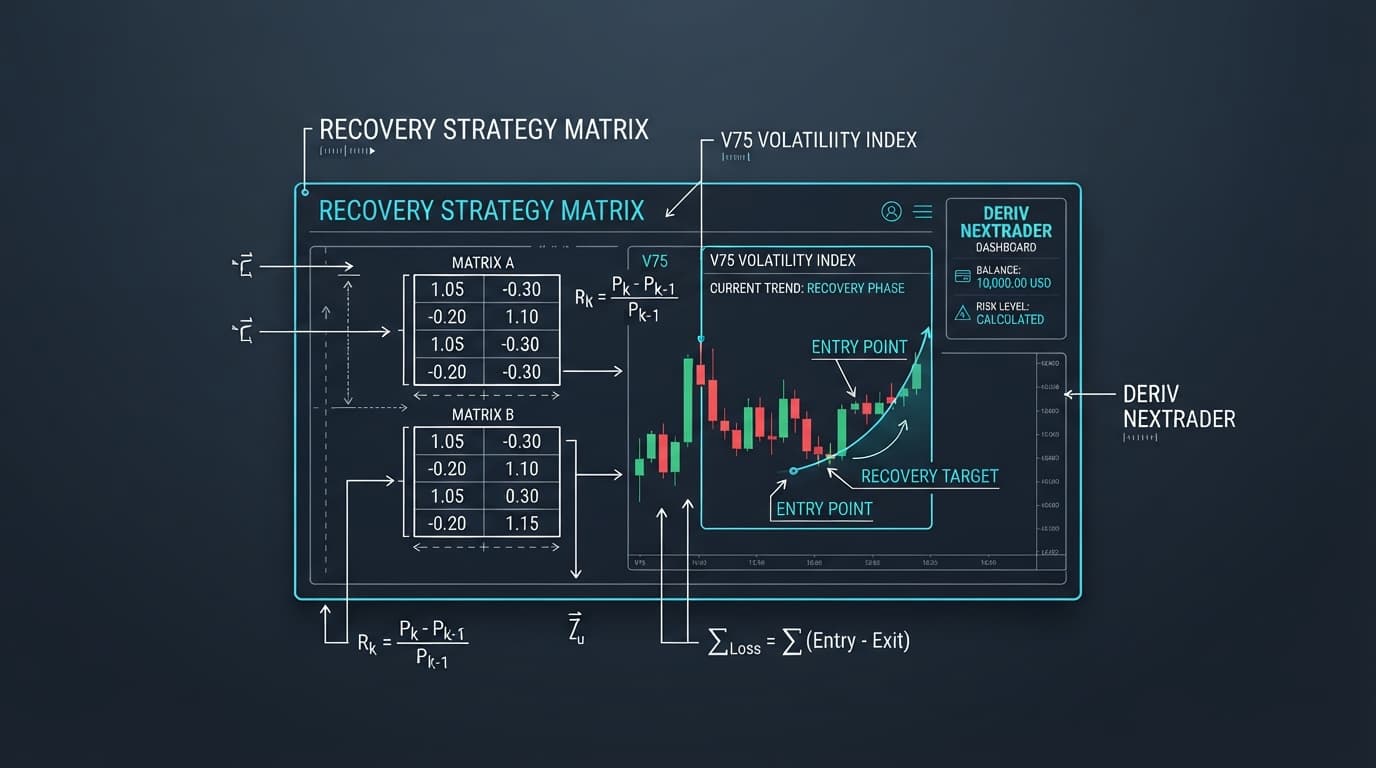
* What is Mesa Milano? Unlike Fixed Stake (constant trade amount) or Martingale (doubling stake after a loss), Mesa Milano is a smart loss recovery strategy. It aims to recover previous losses with a smaller increase in stake, making it less aggressive and potentially more sustainable than a pure Martingale system. It adjusts the stake based on a calculated factor to recover losses while minimizing exposure.
- Configure Mesa Milano Parameters:
* Initial Stake: This should be the same as the initial stake you set in Step 2.
* Multiplier/Factor: This is a critical setting. It determines how much your stake increases after a loss to recover previous losses. A common starting point might be 1.2x to 1.5x. Experiment with this carefully on a demo account. A higher multiplier recovers faster but increases risk.
* Max Consecutive Losses: Set a realistic limit for consecutive losses the bot will attempt to recover from. If this limit is hit, the bot will typically reset to the initial stake or pause, preventing excessive drawdowns. This is a vital risk management feature.
* Profit Target (Optional but Recommended): You can set a daily or session profit target for the bot. Once this target is reached, the bot will automatically stop trading, helping you lock in profits and avoid overtrading.
* Stop Loss (Optional but Recommended): Similarly, you can set an overall session stop loss. If your total losses reach this amount, the bot will stop, protecting your capital from significant drawdowns.
Step 5: Reviewing Settings and Activating the Bot
You're almost ready to unleash your automated deriv bots! The final step involves a thorough review of all your configurations and then activating the bot.
- Comprehensive Review: Before activating, carefully go through all the settings you've configured:
* Broker: Deriv
* Market: Volatility 100 Index (V100)
* Contract Type: Rise/Fall
* Trade Duration: Your chosen duration (e.g., 1 minute)
* Strategy: Smart Signals (ensuring 4+ indicators agree)
* Timeframe: Your chosen signal timeframe (e.g., 5 min)
* Minimum Confidence: Your set threshold (e.g., 60% or 70%)
* Money Management: Mesa Milano
* Mesa Milano Parameters: Initial Stake, Multiplier, Max Consecutive Losses, Profit Target, Stop Loss.
- Check Trading Console: Observe the "real-time color-coded trading console." This console will display live signals, bot activity, and trade outcomes once activated. Its color-coding helps you quickly understand the bot's performance.
- Consider Multi-Account Support: If you manage multiple Deriv accounts, ensure you've selected the correct one during the API connection phase. Nextrader's multi-account support allows for flexible management.
- Start with Demo: Re-emphasize that you should always start by running the bot on a Deriv demo account. This allows you to test your settings, observe its behavior, and fine-tune your Mesa Milano parameters without risking real capital.
- Activate the Bot: Once you are confident in your settings and have thoroughly reviewed everything, click the "Start Bot" or "Activate" button.
- Monitor Performance: Keep an eye on the "live P&L tracking" within Nextrader. This will show you the real-time profit and loss of your automated trades. You can also track your overall performance and adjust settings as needed.
Pro Tips
- Demo Account is Your Best Friend: Always, always, always test your bot configurations on a Deriv demo account first. Volatility Indices can be unpredictable, and fine-tuning your Mesa Milano settings requires careful observation without financial risk.
- Adjust Confidence Levels: Don't be afraid to experiment with the minimum confidence level for Smart Signals. A higher threshold (e.g., 75-85%) might yield fewer signals but potentially higher quality ones, while a lower threshold (e.g., 50-60%) will result in more trades. Find what works best for your risk appetite and the current market conditions.
- Match Timeframe & Duration: While Smart Signals provide directional bias, ensure your chosen signal timeframe (e.g., 5min) and your trade duration (e.g., 1min) are compatible. Sometimes, shorter trade durations might benefit from slightly longer signal timeframes for broader trend identification, but too large a mismatch can lead to poor entries.
- Monitor & Adapt: Automated trading isn't "set and forget." Regularly monitor your bot's performance, especially during significant market shifts. Be prepared to pause the bot and adjust your Mesa Milano parameters, signal confidence, or even switch to a different AI strategy (like Trend Rider or Cloud Walker) if Smart Signals are not performing optimally. Nextrader offers a comprehensive suite of deriv trading tools, so explore them!
Start Trading Now
Ready to experience the power of automated trading with Nextrader? Connect your Deriv account and start leveraging Smart Signals and Mesa Milano today!
Visit the platform: Nextrader App
Sign up for free: Sign Up Free — Nextrader
Join our Telegram for free signals: Telegram
Trading involves risk. Past performance does not guarantee future results.