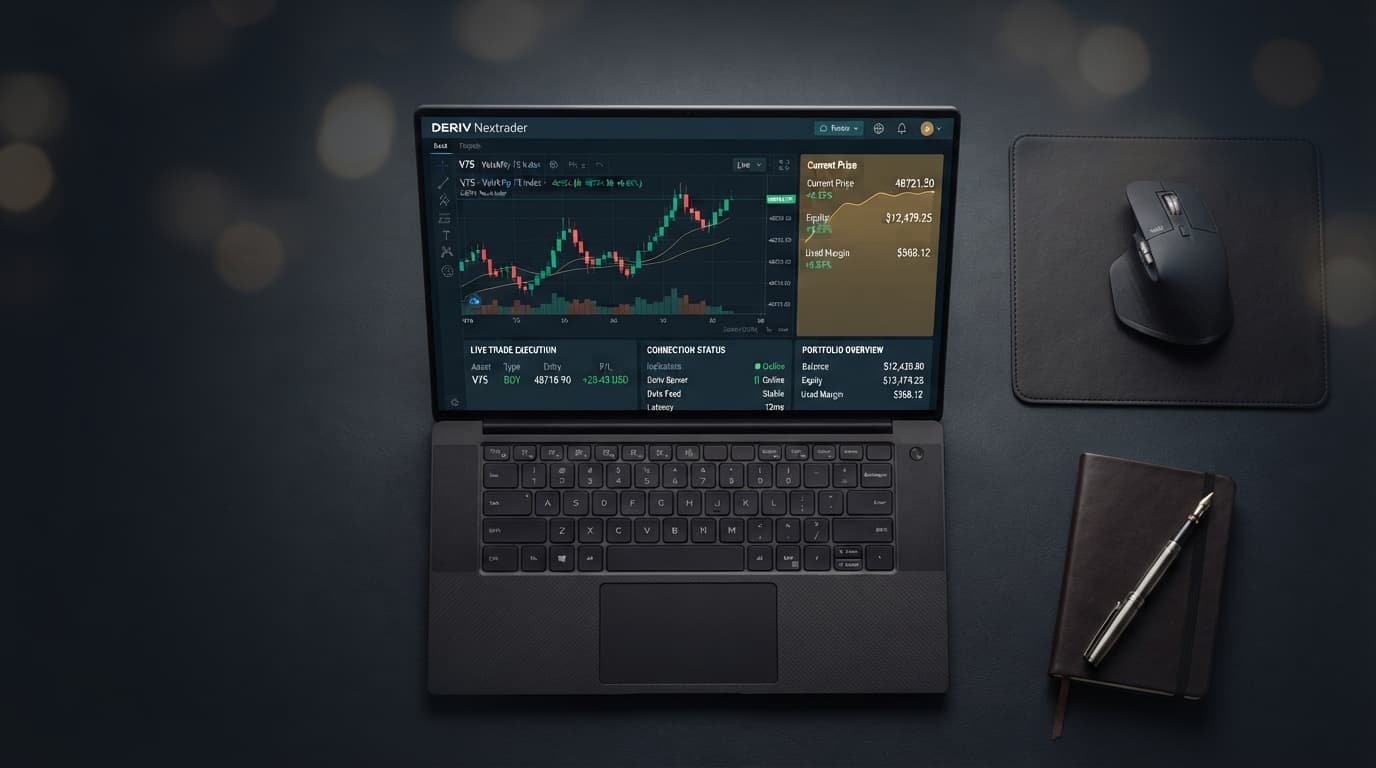
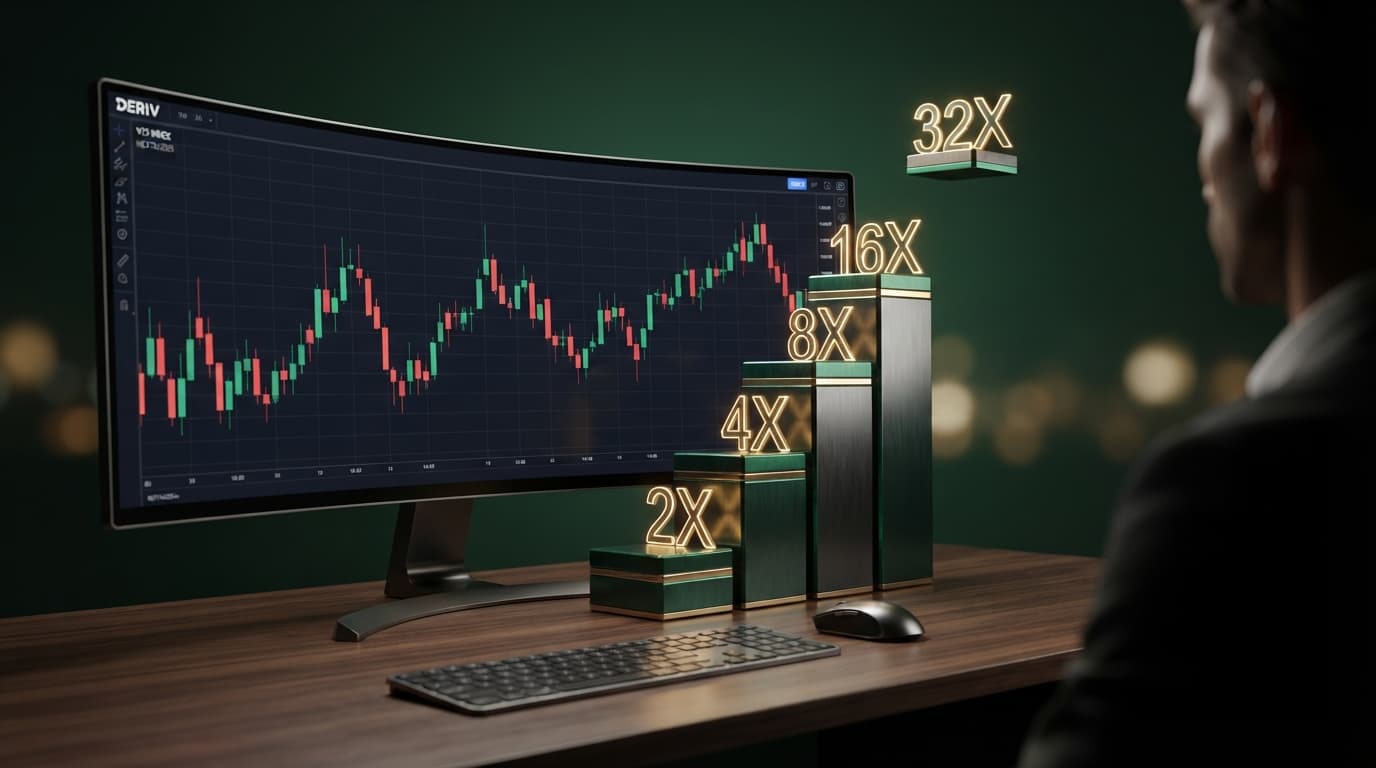
You load Differ Dash on Volatility 75 (1s), hit Run, and watch three consecutive matching losses wipe out twenty small wins. Differ contracts offer a high win rate—roughly 90% theoretical probability—but standard Martingale multipliers destroy accounts when a loss streak hits. Default settings usually multiply your stake by 10x to recover a single lost trade, which exposes your capital to extreme drawdown within seconds on rapid synthetic ticks.
To fix this, you need to modify the underlying block logic inside your free deriv bot. Instead of relying on rigid, high-factor multipliers, calibrating dynamic stake increases lets you control recovery rates while surviving rare but inevitable tick clusters.
The NexTrader Bot library hosts over 747 pre-configured block-based strategies, making it simple to tweak parameters without coding. By opening a free deriv bot designed for Match/Differ trades, you can directly adjust the mathematical variables governing trade size post-loss.
Deconstructing the Math Behind Match/Differ Multipliers
Standard binary bots using fixed 11x or 10x recovery logic on Differ contracts aim for immediate full recovery on step one. On Volatility 75 (1s), where ticks refresh every single second, market noise causes rapid pattern repetition. If your deriv trading bot hits two consecutive 'Match' outcomes (meaning your Differ bet loses), an 11x multiplier jumps a $1 initial stake to $11, then $121 on trade three.
Load a Free Deriv Bot in One Click
Browse 747+ ready-to-run Deriv bots — Rise/Fall, Over/Under, Even/Odd, Match/Differ. No coding, free forever.
- 747+ Free Bots
- One-Click Load
- Rise/Fall & Digits
- Demo or Real
A dynamic stake multiplier replaces this aggressive linear multiplier with conditional step-down or capped scaling. For instance, rather than recovering 100% of lost profit in a single execution, you adjust the block parameters to spread recovery across two or three subsequent winning ticks. Lowering the initial loss multiplier from 10.5x to 4x or 5x drastically reduces capital exposure during prolonged drawdown spells, giving your balance room to absorb statistical variance.
Optimizing Tick Speed for Dynamic Risk
Fast synthetic markets like V75 (1s) require precise timing. When executing 1-Tick or 1-Tick Turbo contracts, execution speed matters as much as contract selection. Lower multipliers combined with quick trade cycles keep your bot active without triggering exponential exposure during localized digit spikes.
Step-by-Step Block Logic Calibration on NexTrader
Adjusting block-based logic requires zero programming knowledge when working inside the platform. Each strategy consists of roughly 48 visual blocks that handle analysis, contract execution, and post-trade calculation.
To calibrate your Match/Differ bot:
- Load your chosen strategy in one click on a Deriv demo balance inside the platform.
- Locate the "Variables" block section managing stake calculation post-result.
- Modify the default multiplier block from a fixed integer to a fractional equation (e.g.,
Stake = Previous Stake * 2.5combined with a loss counter capped at 2 consecutive steps). - Set an absolute maximum stake ceiling parameter to hard-stop runaway balance degradation.
Testing these adjustments on a demo account allows you to measure peak drawdown against total runs. Customizing these block parameters ensures your automated execution respects statistical realities rather than relying on dangerous double-up math.
Choosing the Right Digit Prediction
Beyond stake logic, digit selection impacts execution stability. Combining modified multipliers with dynamic digit prediction—such as targeting digits with low recent frequency rather than static predictions—further smooths out return curves across large sample sizes of binary bots.
Ready to refine your automated trading setups? Browse over 747 ready-to-run trading tools directly at NexTrader Bot, create your trading account at Sign Up Free — Nextrader, and join our active trading community on Telegram at Telegram to exchange parameters with fellow traders today.
Trading involves risk. Past performance does not guarantee future results.